Does it (still) make you feel good?
Does it (still) make you feel good?
In January this year, I spent time with Peter* (a prospective client) observing his business in Brisbane. Peter is a multi-practice dental business owner, and a dentist in his own right. His passion for dentistry, however, has long since disappeared. He was barely present in his businesses, turning up (late) for token clinical shifts a few times a week to ‘demonstrate clinical expertise’. The rest of the time he was as far away from his practices as possible, leaving key people to undertake business operations and decision-making with minimal guidance.
Peter described how the work made him feel depleted, depressed and fatigued. He was just going through the motions on his practice days, waiting for time to pass. He worked in ‘sprints’ of enthusiasm but had a string of unfinished business development projects.
At the same time, he outlined his frustration with the lack of accountability and follow-through by his staff. The people that he had engaged to run his business for him weren’t doing what he expected. He felt like he was always being reactive, putting out spot fires, sorting out basic operational problems and staffing issues.
When I spent time with his senior team, they described being inundated with requests that were outside their role description, being given no indication of priorities, and expected to respond to ad-hoc ideas and issues that didn’t help them do the work they needed to do to keep the doors open.
In fact, one day, the main practice didn’t even open. Not unexpectedly, but as a result of operational deficits. There were simply no dentists available to work. The support staff were redeployed, and several of them even called in sick rather than go to another site. The team knew this was happening, but Peter was taken by surprise when the doors didn’t open that day.
The red flags were everywhere. Absent or out of date systems, team dis-engagement and inconsistent communication, and a lack of improvement processes feeding back vital information about business performance and operational efficiency.
“If your business requires your presence
you don’t have a business, you have a job.”
- Michael E. Gerber
In his well known book, ‘The E-Myth Revisited’, Micheal E. Geber outlines three roles or mindsets that are necessary for running a business: The technician (i.e. the dentist), the manager (planning and systems), and the entrepreneur (vision and creativity). However, most business owners focus on the technical aspects believing this is the only requirement of running a business.
Between 2020 and 2025, the healthcare and social assistance industry recorded the highest percentage growth in business counts of any industry nationally - increasing by 6.6% in the past financial year alone.¹Dental business growth sits at 4.4% per year on average over the past 5 years,²with over 90% of clinics still owner-operated.³ This translates into an ever increasing number of business owners who will be at the forefront of daily business operations.
The Health Care and Social Assistance industry also recorded a four-year survival rate of 82.7% for micro and small businesses — the highest of any industry in Australia.⁴However, formal closure rates don’t always reflect universal business success. These figures often obscure practices that are barely viable, heavily indebted, or sustained only by the principal working unsustainable hours.⁵
So, does your business (still) make you feel good?
The gap between survival and sustainable success is significant. As a business owner, where is your energy currently sitting? Do you still have the passion and drive or has it been diluted by unsustainable hours, staffing and team problems and inefficiencies?
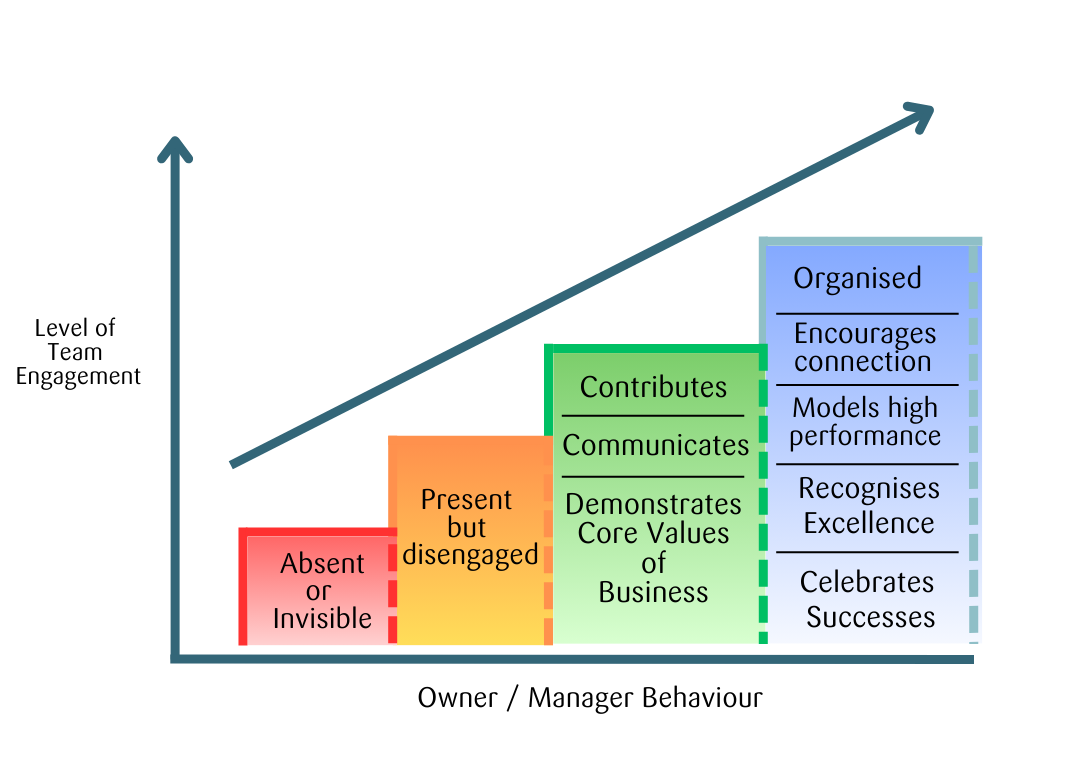
Think of your passion and energy for your business on a rising scale - like a stairwell. At the lowest step, it feels like being stuck in quicksand, slowly sinking and unable to get free of the downward pull. On the top step, it feels like floating on air. Your business and the work you do feels light, easy and exhilarating. You are passionate and innovative, energised by future opportunities.
It looks like this...
Where to from here?
If you are a business owner who has a forward facing role in your practice, consider how you feel, where your energy levels are, and how you might be able to make changes to ensure personal as well as business sustainability.
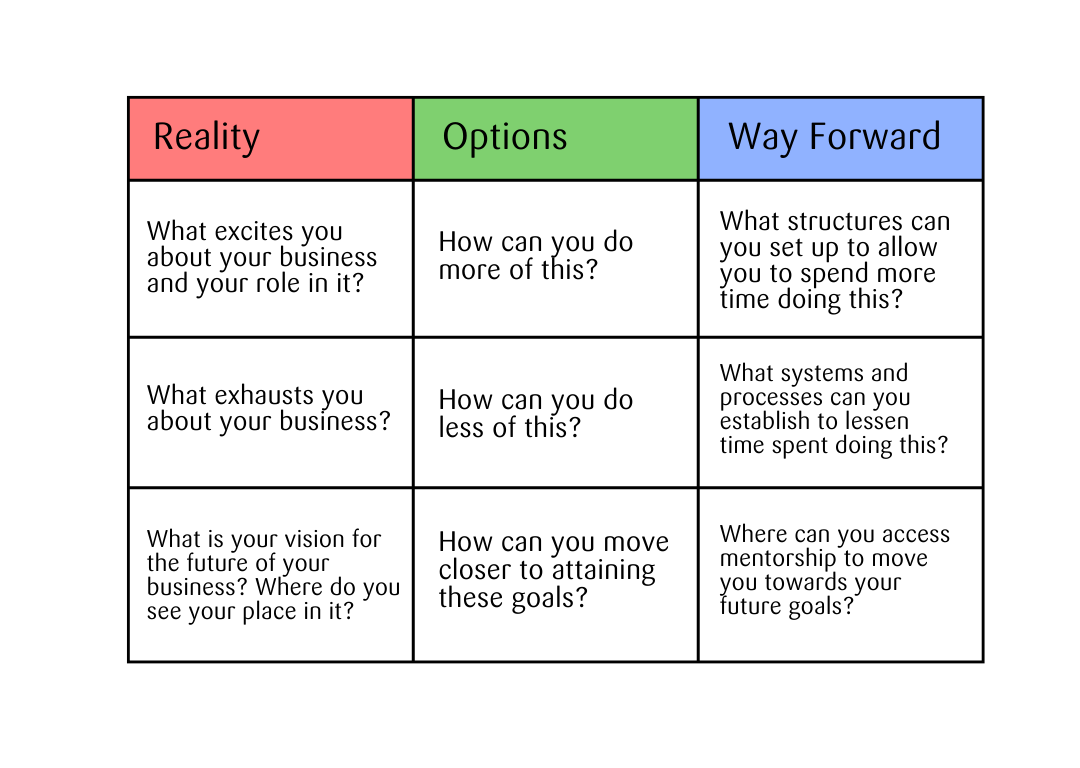
A good place to start is to take a self assessment of how youfeelabout your business and your role in it.
With strong industry growth comes increased demand on your time, energy and finances in order to sustain and begin to consider growth in your business. Below are several questions you could consider:
I’d love to hear how taking time to pause and reflect on your personal journey in business makes you feel.
Yours in healthcare excellence,